Varo was a new amalgamation of strong but separate businesses, split across cultures. Over seven years, Dialogos helped build a system that turned those differences into a unified, high-performing whole: resilient in crisis and ready for the energy transition.
Executive Summary
Varo Energy was formed from two refineries and a Dutch supply,-trading, and retail business. The assets were strong, but leaders from very different cultures had never worked as one team. CEO Roger Brown, a former BP leader with a systems mindset, engaged us to build the operating model and leadership capacity to integrate the parts and scale performance.
With our help, the senior team created the “integration and optimization machine”: a way of working that made friction productive, forced cross-functional accountability, and tied rewards to collective results. Over seven years, we embedded that design through leadership programs, strategic dialogue, and operating structures that held under pressure. The senior team’s coherence became a model for the top 65 leaders, creating a leadership system that could absorb shocks and keep moving.
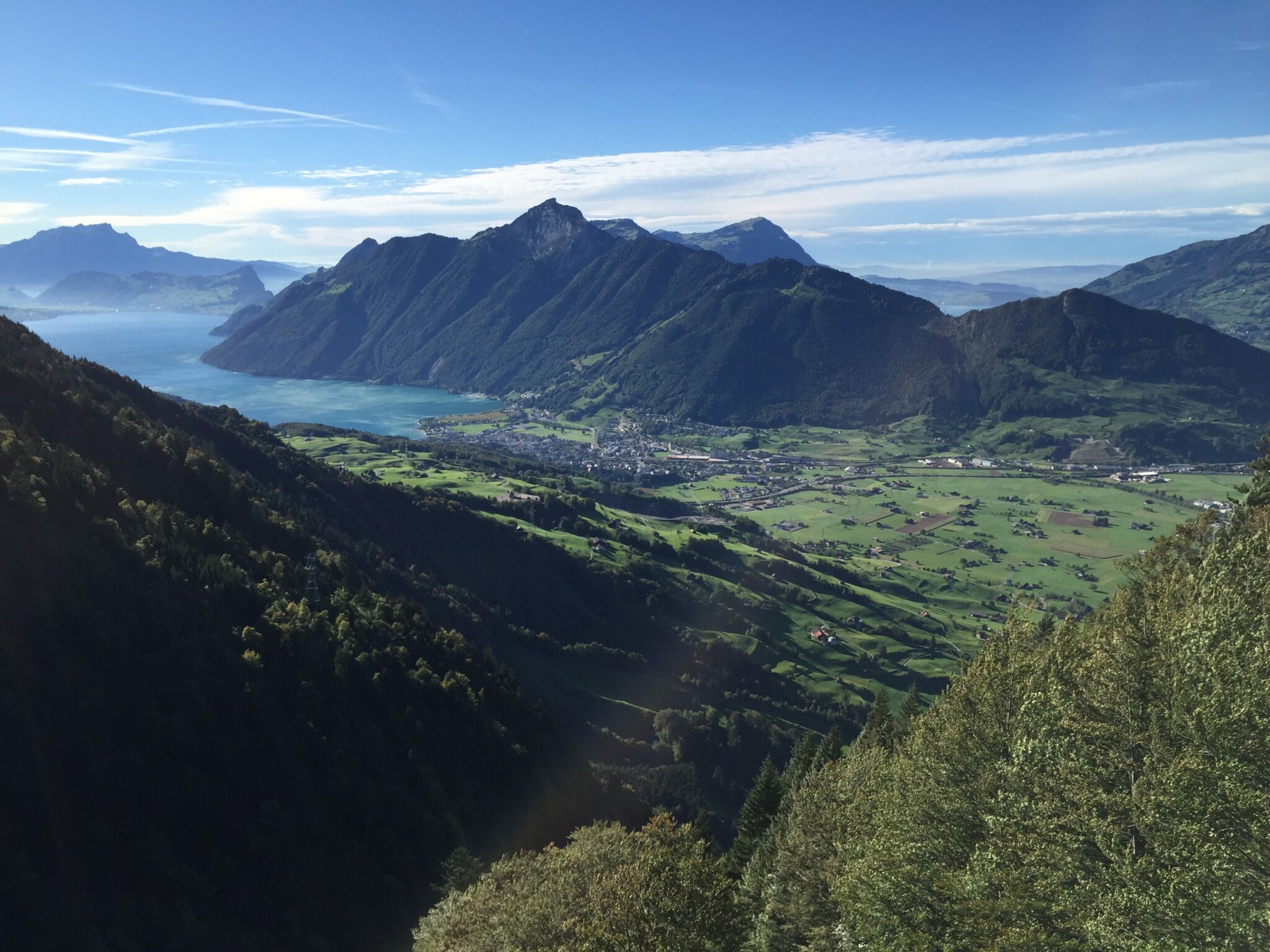
We began at the summit. Not metaphor. A real mountaintop in Switzerland. The air was thin and the view was uncompromising. The people in the room had never sat together like this before: leaders from the Swiss refinery, the German refinery, and a Dutch supply,trading and retail business. Each brought a different history, different assumptions, different instincts about what made a business succeed. We hadn’t chosen this location by accident. I wanted them to feel what it was like to have altitude in every sense — to see themselves and the company from above, with perspective wide enough to hold the whole field. It was a symbolic first step in shifting how they thought about what they were building together, and it set the tone for everything that followed.
That summit was the start of a relationship that would continue for the next seven years, as we stayed with the leadership team to embed the patterns we designed together at altitude. Varo itself was a new creation—backed by investors including a major private equity group, a large trading house, and a Dutch investor. They had bought strong but very different assets and bolted them together. The CEO, Roger Brown, came out of BP’s trading and supply world. He knew the fuels value chain end-to-end, had run large operations before, and thought in systems rather than silos. Together we had talked about this being an opportunity to start with what we knew worked, not what was broken in past setups. From the outset, he was clear: success wouldn’t come from stacking capabilities. It would come from building something that worked as one.
In those early days the leadership began to shape the company’s compass. The vision we formulated over time was to grow Varo into the most successful integrated independent downstream business in Northwest Europe. The mission was simple and relentless: to supply fuels to local and international customers, 24 hours a day, 365 days a year. And a first set of values emerged that guided how people worked together: say what you do and do what you say, respect and collaborate, support and challenge each other, create entrepreneurial teams with a can-do attitude, and an important last one: have fun.
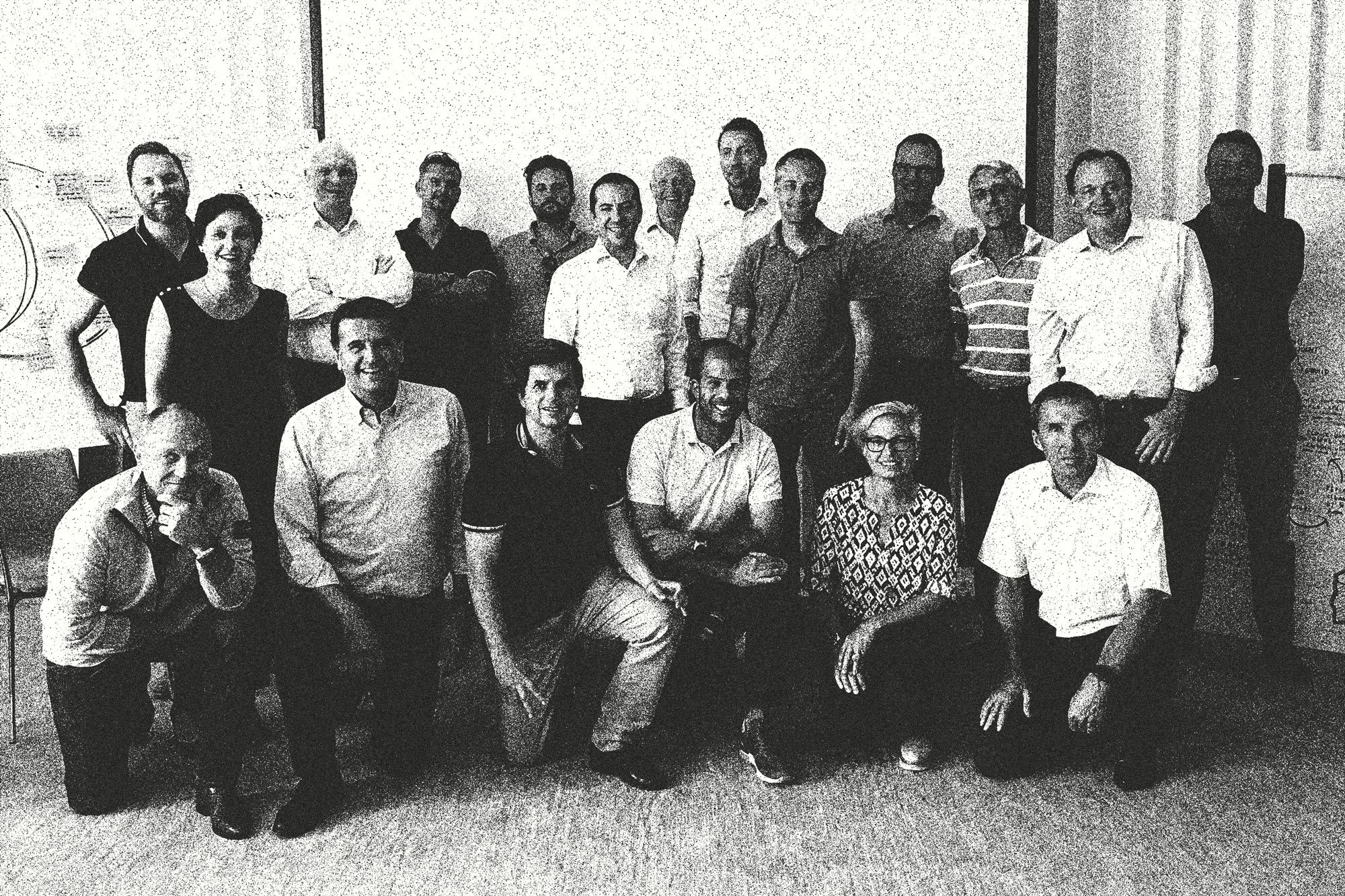
“Bill and his team played a critical role in this build out. They ran a series of meetings with the new leadership team and later the top 50 senior employees to not only help us develop a compelling vision and strategy for the business but also to deliver it. This required us to quickly build a new leadership team together with a pan‑European organization and associated business processes.”
— Roger Brown, former CEO, Varo
The Integration and Optimization Machine
For three days at altitude, we explored what this company could be, seeing each other in the round, testing assumptions, and shaping a business model all could own. From the beginning, one phrase rose to the surface and stayed there: build the integration and optimization machine.
Roger’s design was deliberate. No lone heroes. No local wins that cost the system. The idea was to force systemic thinking and coordinated action, not just cooperation on good days. It wasn’t a matrix with two bosses and the inevitable stalemate. It was a set of deliberate intersections where two people were jointly accountable for an outcome and rewarded for the collective result. It was a deliberate counter to what we’d both seen before in other contexts in the energy industry, when different parts of the fuels value chain competed with each other and cost the system more than it made. Here, the structure itself would demand the opposite: integration and optimization by design. The machine was not only about pulling the first pieces together, but about making further buy-and-build possible — integrating each new acquisition quickly and enabling optimizing flows across the value chain so value could be released fast.
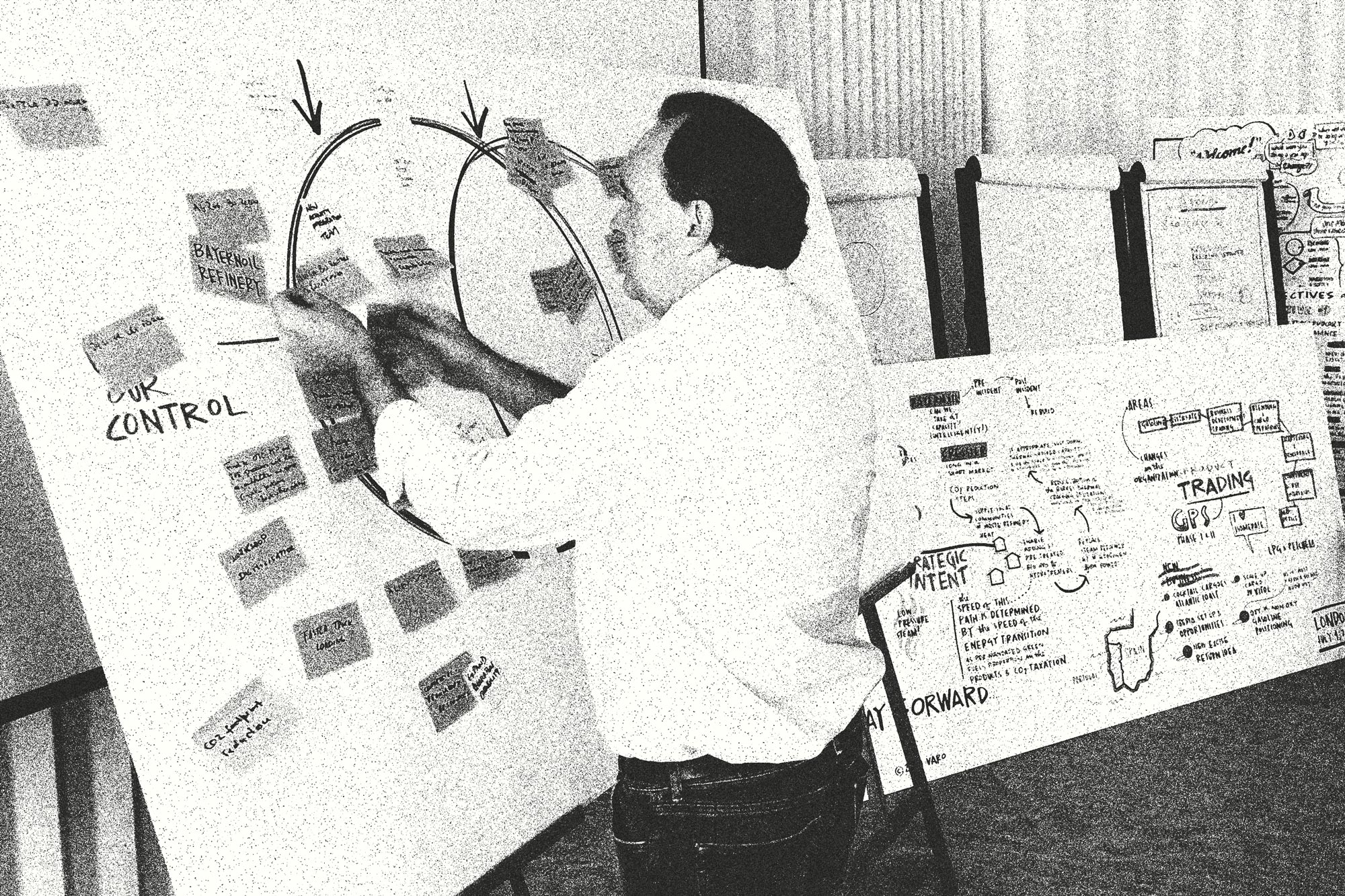
One of the earliest shared models was a simple sketch: two circles for refining and supply, joined by a diamond at the center. The diamond represented the interface — the place where decisions about flows, margins, and accountability converged. It became a way of seeing the integrated value chain not as separate silos but as one system, with deliberate points of coordination that everyone could recognize and act on.
As the business grew, that simple diamond model expanded. It wasn’t only about refining and supply working together inside one country — it became about optimizing across multiple value chains at once, linking German, Swiss, and Dutch assets into a system that could flex and rebalance as markets shifted. This “double optimization” turned what could have been separate national businesses into one coherent enterprise.
One of the early characters who gave the group confidence was a “refinery whisperer” — a leader who could walk into a plant and, without major capital spend, significantly improve performance by building optionality into the system so the refinery and the associated fuels value chains could easily adapt to shifting markets and perform in all seasons. Another was a biofuels lead who at first resisted the idea of taking on a bigger role, insisting they just wanted to focus on their part of the business and the transition ahead. In time, they became a visible part of the leadership fabric, showing that influence can grow as much from reluctant leaders who step up as from those born to it. People like this proved that when you married deep craft and personal commitment to smart system design, performance could leap without compromising safety.
The mix of cultures was as combustible as the fuel that was their business. Dutch marketers were fiercely protective of customer relationships, traders looked for optionality, refiners insisted on discipline and safety. The tension wasn’t about sacrificing customers or safety but about how to balance supply optimization with maximising margin. Traders moved at high speed, chasing optionality like the next big wave. Refiners brought a safety-first discipline that saw risk where others saw opportunity. Layer in national styles — Dutch bluntness, Swiss reserve that wasn’t really reserve, German precision — and you had a team that could easily have splintered. Our work was to make those differences visible and use them as fuel for clarity, not conflict.
Protect. Efficiency. Growth
From early on, the team could see the transition coming. A small biofuels unit was already in the mix. European regulations meant a growing need to source bio feedstocks and blend them into the bio fuels required by their customers. Carbon credits derived from emission reduction programmes as far away as Oman and Laos, alternative bio feedstock sourcing from around the world and understanding the alphabet of compliance and regulatory landscape would all be part of the game.
What guided the business at that time was a framework we called PEG: Protect, Efficiency, Growth. Protect meant investing in existing fossil assets, adding optionality, and ensuring safety. Efficiency meant simplifying systems, strengthening reporting, and managing costs. Growth meant two things: continuing to optimize fossil value chains, and beginning to expand into four renewable pillars — biofuels, carbon trading, hydrogen, and EVs. This became the strategy through which Varo began to step into the energy transition.
The framework took shape in those early leadership sessions, as we looked together for a way to hold the fossil and renewables agendas in the same conversation. Over time, refineries were envisioned to become clean-fuel sites, powered differently, operating differently.
Building Leaders Who Could Carry It
We didn’t begin with a “program.” We began with the work itself: clarifying strategic priorities, identifying the most promising markets, designing for sustained success, and deciding how to engage and lead the wider company. As Varo grew, the need for a more formal development process became clear.
We designed the Senior Leadership Program for the top 65 leaders. Three custom three-day modules over a year, delivered to several cohorts. Virtual coaching. Leadership instruments. Monthly team reflections. Practical interventions leaders would take back to their teams, then examine together in the next module. Alongside this, several senior leaders went through our LCI program, and I became Roger’s personal coach, extending the work beyond group sessions into individual growth.
The focus was on building new habits—individually and collectively—that made the integration machine real. Some leaders had to expand into scale they’d never held before. Others had to release control they’d always relied on. The work was constant, and returned always to the core questions: What does the system need now? And how do we design for that?
“They supported regular offsite alignment conferences for our top 50 senior employees as well as designing and delivering a first level leadership program, specifically designed around delivering our vision for the kind of company we wanted to be. This in particular proved to be enormously successful. Varo was hugely successful, growing to be valued at well over a billion dollars within five years.”
— Roger Brown, former CEO, Varo
Playing the Long Game in the Castle
Behind the visible wins, there was a second game always in play. Like many investor-backed ventures, Varo had to navigate the tension between private equity stakeholders preparing for a near-term exit and a leadership team intent on building for longer-term growth. At times it felt like life inside a medieval castle: alliances shifting, whispers in corridors, and the occasional battle over turf.
Roger understood this wasn’t noise — it was part of the field. The tension with investors was structural. It meant pressure to cut costs and manage the balance sheet versus the team’s instinct to build capacity and pursue expansion. The leadership team had to learn to hold their ground without locking horns.
That took maturity. Some of it grew in moments of pressure, like when a sale process collapsed after months of work, or when geography-based tensions flared between groups. Some of it came from individual leaps: leaders who preferred the comfort of their own domain stepping into broader authority, or learning that “too much space” from Roger was an invitation to act, not a lack of interest.
Over time, the team built the muscle to operate in both arenas — the official meetings where the business was run, and the informal spaces where trust was earned and messages carried between worlds. That ability to navigate the castle without getting lost in it became part of what made the integration and optimization of value chains so resilient. Learning to operate in both arenas was as much a part of the integration machine as the org chart or the operating model.
What Held and What Moved
There were moments that could have split the team apart. A major incident at the German refinery, serious enough to test every part of the safety culture, ultimately led to reinvestment and a stronger rebuild. A planned IPO fell through when the market turned. A later sale process collapsed after months of negotiation, navigating through the turmoil in their markets created by COVID. Through it all, the leadership group kept moving. The pace was relentless, particularly in downturns such as Covid, when protecting margins and surviving market shocks strained the system—but that strain forged resilience. Certain tensions never entirely disappeared, but the core held.
Here’s what I carry forward from this work:
- You can start a company on a mountaintop and make that altitude stick in how it sees itself.
- Friction between cultures, if named and worked, can become an engine for clarity and speed.
- Resilience is built in the moments that could split a team, if you’ve done the work before the crisis.
- Great teams don’t just withstand shocks; they keep moving together.
Many separate acquired businesses became one team with a shared way of playing. What began as a buy-and-build fossil strategy became a platform to step into renewables through the PEG framework and four new pillars. “Last man standing” in fossil fuels turned into “first in” on the transition. Meetings shifted from downloads to design—containers for new coordination. A senior circle of individuals became a development engine for the top 65, spreading the habits the system needed to endure.
I’ve spent years in big energy companies. What stayed with me here wasn’t a new theory. It was proof that when you start from a systems picture — and build the human capacity to inhabit it — the company becomes something sturdier than a plan.
For me, it was also a fulfillment: the rare chance to start something on the right foundation, to see it prove itself through crises, and to know that what we believed would work, did.
“I will always be grateful for Bill’s insightful views and challenges throughout my own personal journey during this time. We quickly formed one of the most important relationships I would have over my career.”
— Roger Brown, former CEO, Varo