Feature Article
From Reading the Room to Raising the Room
What it means to listen for what a room is capable of, and what keeps most of us from hearing it.
Read More →
William Isaacs
Mark Carney’s invocation of Václav Havel at Davos struck a chord because it was a clear example of true character in expression. We can admire from afar, or we can follow that example. In a time of fracture and drift, living within the truth is not an occasional thing. It is a daily act of leadership.
The great red dragon continues to crash around in the heaven of human consciousness, frightening people into submission and obedience. Its seven heads, with its seven crowns and ten horns, embody all manner of appetites and distorted channels of expression within the body of humanity.
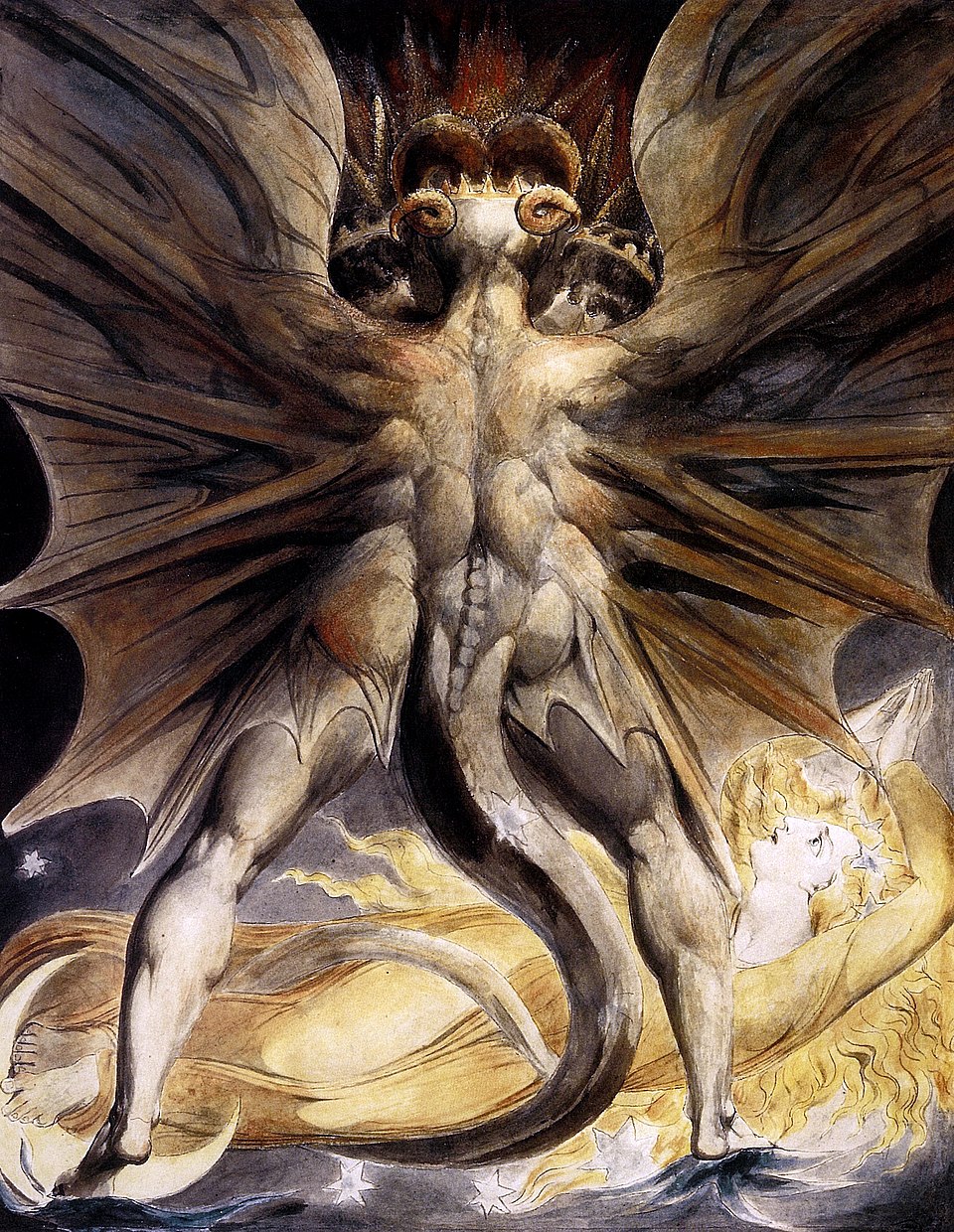
William Blake's: "The Red Dragon and the Woman Clothed in Sun"
These past few years have seen some moderate upgrades to the heads of the dragon. Social media is a relatively new head, pumping out all kinds of noise and distortions, blotting out the stars and obscuring the light. AI is another, perhaps wearing a gilded crown of LEDs. But the dragon is not only out there—in the algorithms, the institutions, the authoritarian drift. It lives equally in our collusion with these forces.
Ursula Le Guin understood this. In her Earthsea, the rule was taught to children: “the name is the thing, and the truename is the true thing. To speak the name is to control the thing.” The knights and wizards of old knew it too. You slay the dragon by calling it by its true name. In other words, you shine the light. Ultimately this is a remarkably simple act. When fear no longer dominates, and the light shines, the dragon is quickly banished. This is what Canadian Prime Minister Mark Carney did at Davos. The theme of this year’s World Economic Forum was “A Spirit of Dialogue”—which, people wryly noted, was not exactly what was on offer. What was on offer, from an unexpected quarter, was a head of state who named uncomfortable truths. He quoted from a remarkable essay called “The Power of the Powerless” by Václav Havel, the Czech playwright and dissident who ultimately became that country’s president.
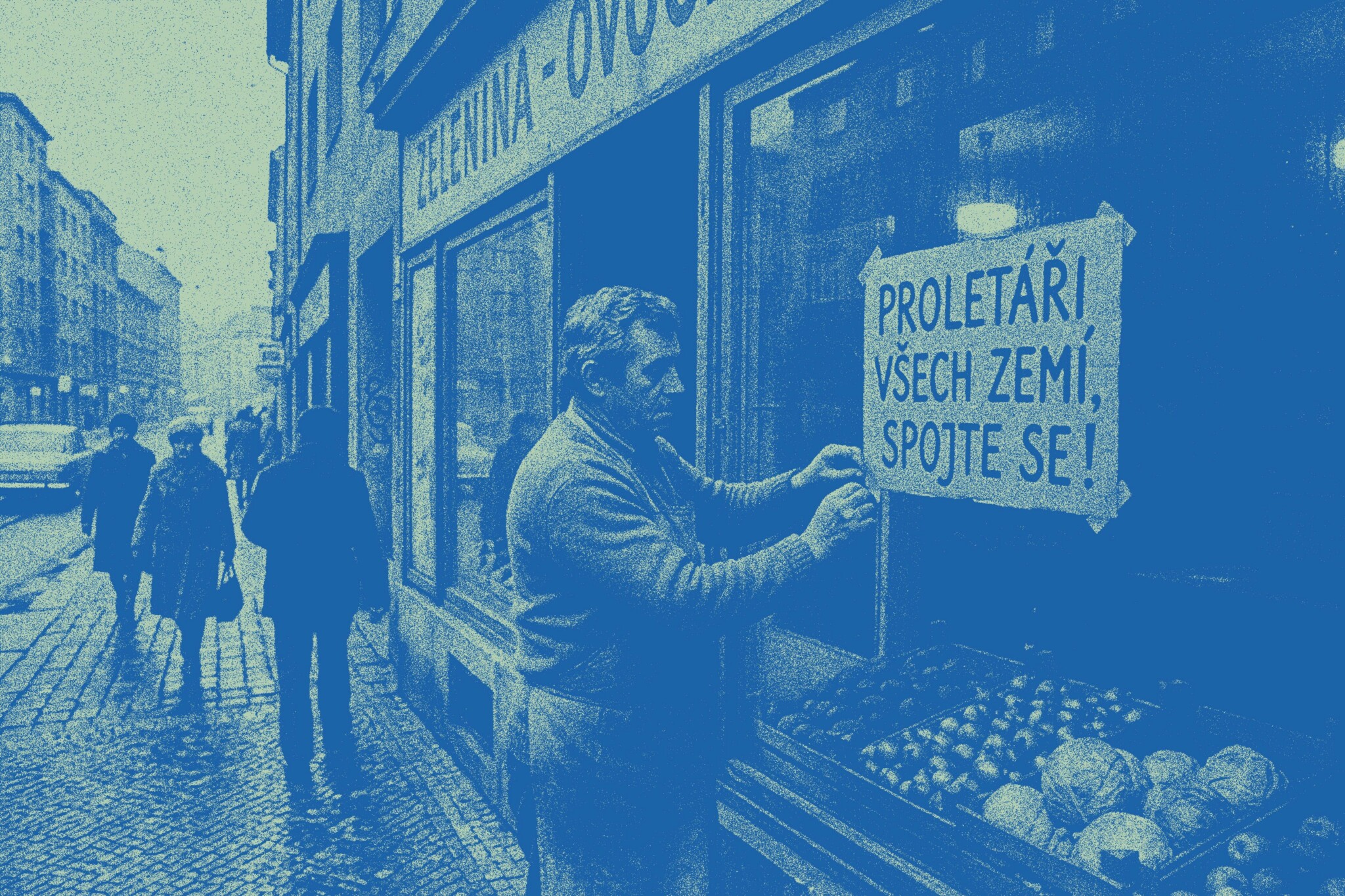
Carney quoted the example Havel wrote about in his essay of a greengrocer who every morning places a sign in his window that says, “Workers of the World Unite.” Carney says the greengrocer…
…doesn’t believe in it. No one does. But he places the sign anyway to avoid trouble, to signal compliance, to get along. And because every shopkeeper on every street does the same, the system persists—not through violence alone, but through the participation of ordinary people in rituals they privately know to be false.
Havel called this “living within a lie.” Carney went on:
The system’s power comes not from its truth but from everyone’s willingness to perform as if it were true and its fragility comes from the same source. When even one person stops performing, when the greengrocer removes his sign, the illusion begins to crack.
The feeling of powerlessness is not new. Victimization is a habit that runs through the entire human condition. I’ve spoken with many leaders over the years—CEOs, prime ministers—who have said precisely this: “People imagine I have power. But I cannot do much.” What is this phenomenon, and why is it so pervasive?
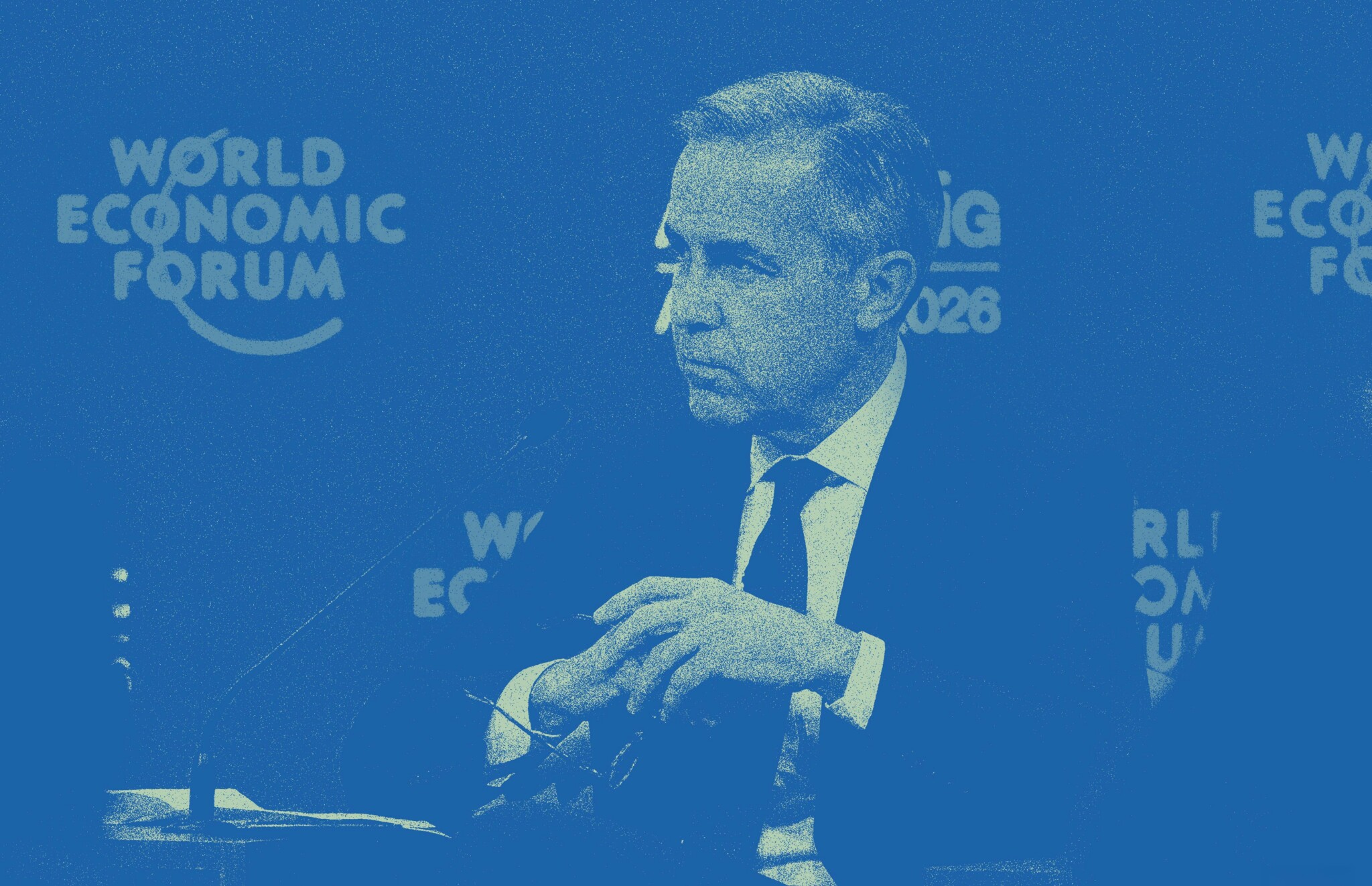
Carney, as a head of state, challenged this view. He was responding to tectonic shifts in the geopolitical landscape that have upended the rules-based order that has prevailed for the past 80 years. He gave voice to the anxieties many leaders have had. He called for people to take the sign from out of their window and to admit that a different order is unfolding, and that they were not, in fact, powerless in the face of these changes.
It is easy to condemn collusion. “If I were there, I would have acted differently,” one might think. But these patterns come to us from insidious and intimate sources, and often at ages when we are relatively defenseless. A disapproving word from an authority figure. A message of praise infected with a destructive meaning (“That was great—for now”). And sometimes, of course, much more violently. The signals that we are not good enough or reliant on others for validation and success or our very lives bury themselves deeply into our psyches and tend to live there like petrified fossils. Social systems and the political leaders who claim authority often take full advantage of this state of disequilibrium. But these patterns are not permanent features of anyone’s personality. They are far more malleable than we have previously accepted. This takes two steps; First, speak the magic words: call the pattern by its true name. But this only works if you are, subsequently, being what you are talking about.
Carney, in his talk at Davos, did this. Speaking as a Prime Minister, in Davos, he pointed to his own, and everyone else’s, collusion. He said: “We knew the story of the international rules-based order was partially false; that the strongest would exempt themselves when convenient, that trade rules were enforced asymmetrically…So, we placed the sign in the window. We participated in the rituals, and we largely avoided calling out the gaps between rhetoric and reality.”
He said that the order that we have been living with over the last eight decades has not just changed but broken down: “We are in the midst of a rupture, not a transition.” While Carney was thinking of this in terms of the geopolitical order, institutional failure, and the rising tide of authoritarianism in the great power countries, the breakdown is really much more profound. The entire edifice of the thought-made world, the self-serving pattern of human appetites and aims, is fracturing. What was fascinating, and encouraging, was the level of response to Carney’s words. He received a standing ovation at Davos and his words have been echoing around the world for some weeks now. The resonant chord he struck points to something important. The willingness to face facts turns out to be liberating and empowering, not a cause for fear.
Carney was pointing to the opportunity in these moments of so-called breakdown to find a new path. What the reception to his speech revealed is a widening recognition of the power of what Havel called—in direct contrast to “living within a lie”—“living within the truth.” Havel notes in his essay that putting up the sign is like saying, “I’m afraid and therefore unquestionably obedient.” When people do this, they collude with a system that represses them, and they deceive themselves about their collusion—what Havel rather brutally called “the low foundations of their obedience.” They think that by going along they will be safe. They will not. While Havel and Carney were speaking about political systems, what people are actually doing is denying the truth of themselves, the source of their own life. That is truly dangerous. Havel was aware of this. In this same essay Havel points to the deeper problem this creates:
…under the ordinary surface of the life of lies…there slumbers the hidden sphere of life in its real aims of its hidden openness to truth. The profound crisis of human identity brought on by living within a lie…[is] a deep moral crisis in society.
The antidote, he says, is that we need
…a radical renewal of the relationship of human beings to…the “human order,” which no political order can replace. A new experience of being, a renewed rootedness in the universe, a newly grasped sense of higher responsibility, a newfound inner relationship to other people and to the human community, these factors clearly indicate the direction in which we must go.
Havel wrote these words in 1978, calling not for a political revolution but for people to find a realignment with the truth. This could come across to some as quite abstract, leading them to wonder, “Then what are you going to protest against?” But the courageous response is—as it has been across history—is, “I’m going to stand still. I’m going to tell the truth and reestablish the sense agency I have relinquished.” There is a way through the ruptured state. And it is encouraging to see that there is a real hunger to discover where this leads.
What does it mean to live within the truth? It doesn’t take much to recognize that life is endeavoring to bring creative order into one’s own life. The difficulty has been the degree to which everyone has been involved in the battle of resisting it, in contending with the dragon. That resistance continues but increasingly we learn to transform it within ourselves. We do this by taking the sign out of our own window, facing the fact of our tendencies to live within our comfort zone of playing small, and stop accepting an identity that is anything other than the truth of ourselves. It’s not the factors of resistance and self-disempowerment in other people’s consciousness that matter; it’s our own. We have to do the work of letting the collusion of powerlessness dissolve. Human beings have been caught in an anesthetizing collective comfort zone. “We’re powerless. That’s how it is. Things are unfolding the way they do. You can’t do much about it.” Carney shined the light on the lie that this is.
To step past the lie and live within the truth could be dangerous, like poking your head above the parapet. It seems to be safer to maintain the stance everyone else has, that one cannot do much. But this is only true if one is still battling with the dragon. Shining the light, the struggle dissipates.
We recognize this when we see it. On a cold December evening in Montgomery, Alabama in 1955, Rosa Parks was seated in the section of the bus where Black and white passengers could both sit. The bus driver asked her to move for a white passenger. She refused. People imagine that great acts of leadership involve making great speeches or fighting great battles. And at 6:00pm she was sitting in her seat. And at 6:01 she was still sitting. There was no outer movement at all. As she later put it,
I felt that it was not right to be deprived of freedom when we were living in the Home of the Brave, and the Land of the Free. Of course when I refused to stand up on the orders of the bus driver, for a white passenger to take the seat…I was not sitting in the front of the bus, as so many people have said… and neither [were] my feet hurting, as many people have said. But I had made up my mind that I would not give in any longer to legally imposed racial segregation.
She decided to act the way a free woman would. The change was in her consciousness. In other words, she decided to live within the truth. This one simple act of refusing to give up her seat has resonated for over seven decades since.
Living within the truth reconnects us with something larger than our fear—the power that is organizing everything, everywhere. Learning to be functional within the flow of the power of the whole is the true positioning of human consciousness. The fact that it’s been abandoned for however many centuries is beside the point. It needs to be brought now into form, brought to focus now through each of us.
One does not really need, nor does one ever get a preview of the impact that emerges as a result of one’s radiant action. It is all part of many centuries of the unfolding creative process to finally allow a point of focus to emerge. And here we are. The wider patterns are becoming visible—leadership emerging that names the lie, that refuses the performance. The light is shining and the dragon is being cast out. The point of focus for a new day is available to own, if we take responsibility for it. Rosa Parks did not know, sitting still on that bus, that she was igniting a movement that would reshape a nation. She only knew she was done with the lie. That is what this moment asks of us. And when the light shines, the results appear.

What it means to listen for what a room is capable of, and what keeps most of us from hearing it.
Read More →
Most transformation efforts fail not because the solution was wrong but because the people who need to implement it are the same people who stand to lose from it. Skip Griffin draws on decades of organizational work — and one formative year inside a Boston high school — to explain why elegant design isn’t enough, what the hidden accounting looks like, and how leaders can build something worth saying yes to.
Read More →

We all operate inside a living system of thought, emotion, and relationship—a shared code that shapes how we sense and act together. Drawing from decades of fieldwork, Bill Isaacs and Skip Griffin show how attention moves through four layers—Reaction, Nous, Field, and Identity—and how learning to work with these layers allows transformation to unfold as a natural process rather than an engineered event.
Read More →
You don’t need perfect clarity to start to get unstuck—just the willingness to listen, and the courage to engage.