Feature Article
From Reading the Room to Raising the Room
What it means to listen for what a room is capable of, and what keeps most of us from hearing it.
Read More →
By Bill Isaacs and Skip Griffin

What if the real leverage in leadership isn’t in strategy or structure, but in the invisible system that shapes them both? dialogOS is a way to see and work with that system—the living code that determines whether a group can move together, or stay stuck.
Walk into nature quietly, and your nervous system begins to settle. Suddenly you perceive what was always there—birdsong, rustling, the pulse of life everywhere. The sea offers the same invitation. Waves arrive every five seconds—breath’s natural pace—and your system finds itself breathing with the ocean, or the ocean breathing with you.
There is meaning and richness in these settings, and none of it requires thought. For many of us, it’s easier to sense these natural pulsations in the wild, away from screens and the distractions of our lives.
There is another rhythm in us—a living flow that underlies how we communicate. This current is always there, shaping the space between us, but it’s easily obscured. Our reactions, judgments, and habitual thoughts interrupt it, just as noise can drown out the sound of the waves and our connection to its pulsations. Yet every one of us has felt that flow: in a deep conversation among friends, in a moment of truth-telling, in silence shared without effort. In those moments, something opens. We see and feel more. Insight becomes available, and both the present and the future come into clearer view.
This flow is not something we create. It’s the expression of a deeper, living system that is always operating within and between us. This experience can open up among a few people, but it can also emerge in a group. Remarkably, if people learn to allow it, they can together perceive and think and talk together in alignment with this flow. This does not mean they will always agree or that there will not be conflict and dissonance. Dissonance is uplifted into the creative vortex without removing awareness of the underlying context of connection. Difference builds upon difference. This is not just a different way of talking, but of being together.
We call this the dialogOS: the human operating system that runs beneath all thought, speech, and action. You can’t turn it off; but you can lose contact with it. Like the rhythm of breathing, it never stops—but awareness of it does. The work is to perceive it again, and to learn to move with it consciously.
Calling it an operating system matters. Seeing leadership as an operating system changes what’s possible. It allows us to work at the level of cause—the code that determines how thought and relationship behave—rather than at the level of output, where symptoms appear.
When people begin to notice dialogOS, they’re often struck by how comprehensive it is—and how invisible it’s been. It mediates our experience in ways we rarely notice.
Most leadership and change efforts focus on what’s visible—the applications on the surface: projects, strategies, and processes. dialogOS lives underneath. It’s the underlying rhythm that shapes how those outward systems behave. Once leaders begin to understand how it functions, they can work with it—not by adding new programs, but by altering how attention, relationship, and purpose flow through their system. Analogies, of course, have their limits: we are not implying that we live in an algorithmic reality. Far from it. Dialogue’s ancient roots are “the flow of meaning”: dia is through, logos is meaning, but also relationship. In the Greek translation of the Bible, “word” in Greek is logos: “In the beginning is the Word (logos)” The name of our firm came from this source and we have used it for thirty years.
When we talk about dialogOS as an operating system, we’re not referring to a single monolithic reality. Like any OS, it has layers—from the kernel that manages life’s essential rhythms, to the interfaces that translate between raw experience and conscious action.
At its deepest level, dialogOS is always running. It’s the living substrate that allows human beings to sense, connect, and make meaning together—the shared field through which presence and communication flow. This base layer doesn’t disappear; it can only be obscured. The “flow” we sometimes rediscover in deep dialogue or communion with nature is evidence that the system is still intact.
But over time, the layers of the system—the human equivalents of drivers and applications—become tangled or degraded.
When people begin to notice dialogOS, they’re often struck by how comprehensive it is—and how invisible it’s been. It mediates our experience in ways we rarely notice.
We see this medium as comprised of four interdependent layers: Reaction, Nous, Field, and Identity. These layers operate within each person and between people simultaneously. For each of us, they are either clear or opaque, fluid or crystallized—which determines whether the system flows through us or becomes stuck.
Reaction is the body’s fast intelligence: the reflexive surge of feeling, memory, and protection that moves through us before conscious thought arrives. It keeps us alive, but it also keeps us small. When this layer is clear, we can feel what’s happening without being hijacked by it. When it becomes opaque, unprocessed fear, anger, or grief fragment our attention and narrow our field of vision. Conversation becomes combat. Possibility collapses. The body remembers old threats and treats new situations as if they’re the same.
Nous is the “system of thought”: the collective mental architecture that David Bohm described as operating across individuals and cultures, shaping what becomes thinkable. This is not simply individual reasoning, but a pervasive network of assumptions, frameworks, and inherited patterns through which we make sense of experience. Thought appears to report reality objectively, but it actually constructs reality while hiding the fact that it’s doing so. It creates useful fictions, it fragments, and it polarizes. “Thought creates the world and then says ‘I didn’t do it’,” as Bohm put it. When this layer is fluid, we can think with the system rather than being thought by it. When it crystallizes, we mistake our constructions for truth, and the problems we try to solve emerge from the same thought-patterns that created them.
Field is the space that forms between and around us: the palpable quality of a room or conversation that either opens possibility or shuts it down. This isn’t abstract: you feel it when you walk into a tense meeting, or when a conversation that was stuck suddenly shifts. Field is shaped by the quality of presence people bring—what we call tone. The tone we extend affects what becomes sayable, thinkable, possible. When this layer is clear, truth can move; people speak from reality rather than from role; insight becomes available. When it contracts, we grow numb to the subtle signals that coordinate us with others. Intelligence becomes brittle, connection becomes transactional, and the space loses its capacity to hold what wants to emerge. Field is where we either remain isolated in our separateness or discover we are held in a larger coherence.
Identity is the ground of presence itself: not what we think or feel or project, but what we are beneath all that. This is the source layer of the operating system, the animating current that runs through everything else. When it is clear, there is assurance—not certainty about outcomes, but an unshakeable knowing of Self that doesn’t depend on circumstances. We can face uncertainty, conflict, and change without losing our center. When Identity becomes obscured—blocked by reactivity, locked thought-patterns, or contracted fields—we experience a kind of amnesia. We forget who we are and become driven by what’s happening to us. We lose access to the energy and qualities that allow us to act rather than react, to lead rather than defend, to be present to what is rather than captured by what we fear. Our Identity, our Self, is not something we create or achieve; it’s what we discover has always been there when the other layers become transparent enough to let it through.
All four layers are present in every moment. Learning to sense which one is driving and which is dormant is how we begin to work with the operating system instead of being run by it.
These layers can become distorted:
These are not flaws in the operating system, but distortions in its running state—memory leaks, corrupted processes, defensive scripts. The system remains fundamentally whole; it’s our awareness of it and alignment with it that require restoration.
Calling it an operating system matters. Seeing leadership as an operating system changes what’s possible. It allows us to work at the level of cause—the code that determines how thought and relationship behave—rather than at the level of output, where symptoms appear.
Better operating dialogOS means developing deliberate attitudes and mindsets, and practices that help us move from reaction to coherence. We’ll be exploring some of these tools in future posts.
Bill wrote in Dialogue that there are four key practices of dialogue—Listening, Respecting, Suspending and Voicing. All of these are at play in our four layers above; but start by listening, to the silence or otherwise. As you step into a room, stand still. Notice what makes itself seen when you activate the silence.
When we say dialogOS is “always there,” we mean that the architecture of connection and meaning-making never stops running. When we don’t experience flow, it’s because our interface with that system—the emotional, cognitive, and energetic layers—has become misaligned. The work of transformation is to bring those layers back into coherence so that the base rhythm, like the breath or the waves, can be felt again and move through us freely.
What it means to listen for what a room is capable of, and what keeps most of us from hearing it.
Read More →
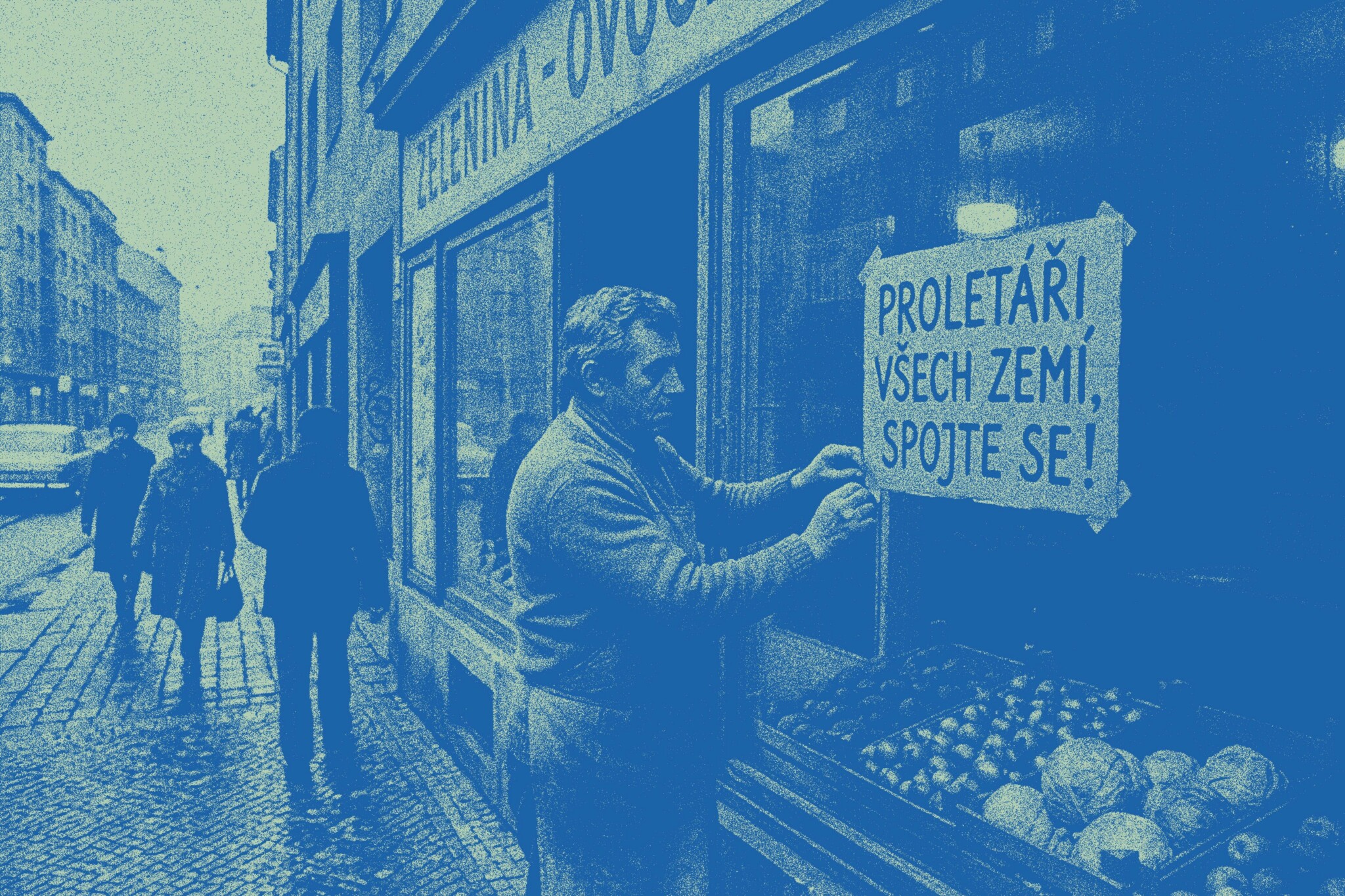
Mark Carney’s invocation of Václav Havel at Davos struck a chord because it was a clear example of true character in expression. We can admire from afar, or we can follow that example. In a time of fracture and drift, living within the truth is not an occasional thing. It is a daily act of leadership.
Read More →
Most transformation efforts fail not because the solution was wrong but because the people who need to implement it are the same people who stand to lose from it. Skip Griffin draws on decades of organizational work — and one formative year inside a Boston high school — to explain why elegant design isn’t enough, what the hidden accounting looks like, and how leaders can build something worth saying yes to.
Read More →

You don’t need perfect clarity to start to get unstuck—just the willingness to listen, and the courage to engage.